Moving Averages: SMA, EMA & WMA Compared
What is a Moving Average?
A moving average is a way to smooth out data. It helps us see the trend over time. This is very useful in finance and statistics.
Types of Moving Averages
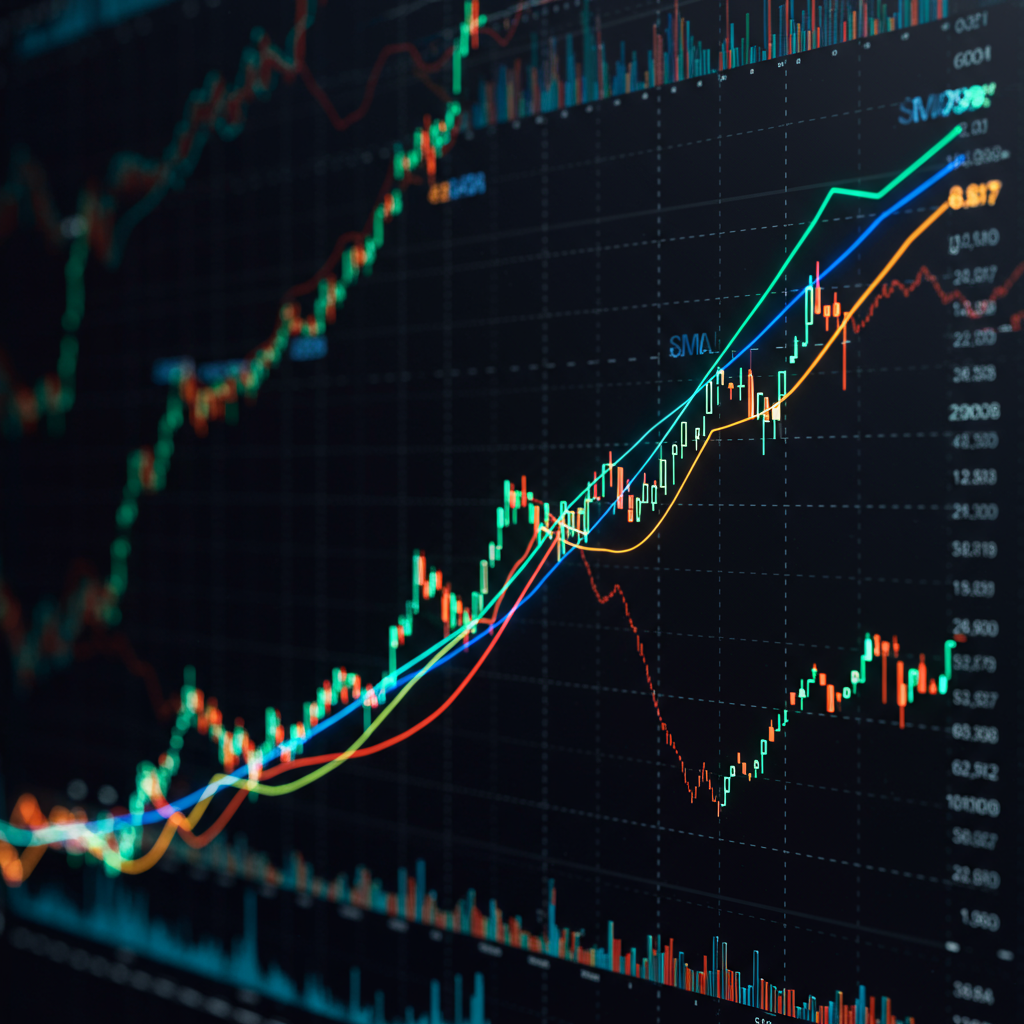
There are three main types of moving averages. They are Simple Moving Average (SMA), Exponential Moving Average (EMA), and Weighted Moving Average (WMA). Each type has its own way of calculating the average.
1. Simple Moving Average (SMA)
The Simple Moving Average is the easiest one to understand. It adds up the prices over a certain time. Then, it divides that total by the number of time periods.
For example, if we look at the last 5 days of stock prices, we add them up and divide by 5. This gives us the average price for those days.
2. Exponential Moving Average (EMA)
The Exponential Moving Average gives more weight to recent prices. This means it reacts faster to price changes. It uses a special formula to do this.
Because of this, the EMA is often used by traders who want to make quick decisions.
3. Weighted Moving Average (WMA)
The Weighted Moving Average also gives different weights to prices. However, it does this differently than the EMA. In WMA, the most recent prices have the highest weight, but the weights decrease for older prices.
This method is good for those who want to focus more on recent data but still consider older data.
Comparison of Moving Averages
| Type | Weighting | Speed of Reaction |
|---|---|---|
| Simple Moving Average (SMA) | Equal weight | Slow |
| Exponential Moving Average (EMA) | Recent prices weighted more | Fast |
| Weighted Moving Average (WMA) | Most recent prices weighted most | Medium |
When to Use Each Type
Choosing the right moving average depends on your needs. Here are some tips:
- Use SMA for a simple view of trends.
- Use EMA for quick trading decisions.
- Use WMA to focus on recent data while still considering older data.
Benefits of Moving Averages
Moving averages help us in many ways. They make it easier to see the trend. They also help to reduce noise in the data.
Traders can use moving averages to make better decisions. They can spot trends and changes in the market.
Limitations of Moving Averages
While moving averages are useful, they also have some problems. They can lag behind the current price. This means they may not show real-time changes.
Also, they can give false signals during market volatility. It’s important to use them along with other tools.
Conclusion
Moving averages are important tools for understanding trends. The SMA, EMA, and WMA each have their own strengths. By knowing how to use them, you can make better decisions.
FAQ
What is the main purpose of a moving average?
The main purpose is to smooth out data to see trends better.
Which moving average is best for beginners?
The Simple Moving Average (SMA) is best for beginners because it is easy to calculate and understand.
Can I use moving averages for stocks and other markets?
Yes, moving averages can be used for stocks, forex, and many other markets.
Moving averages help us see trends clearly and make informed decisions.